
The Neuroscience of Play: How We Used to Consume Happiness


The theater lights dim, and the familiar neon Disney castle flashes across the screen. But as Pixar's Toy Story 5 (2026) begins, the mood shifts. Woody and Buzz Lightyear aren't just fighting off a neighborhood bully or an evil collector; they are fighting an entirely new villain: a sleek, glowing, frog-shaped smart tablet called the "Lilypad." As Rex the dinosaur panics about "extinction" and Jessie desperately cries, "I'm losing Bonnie to this device," a collective gasp echoes through the theater.
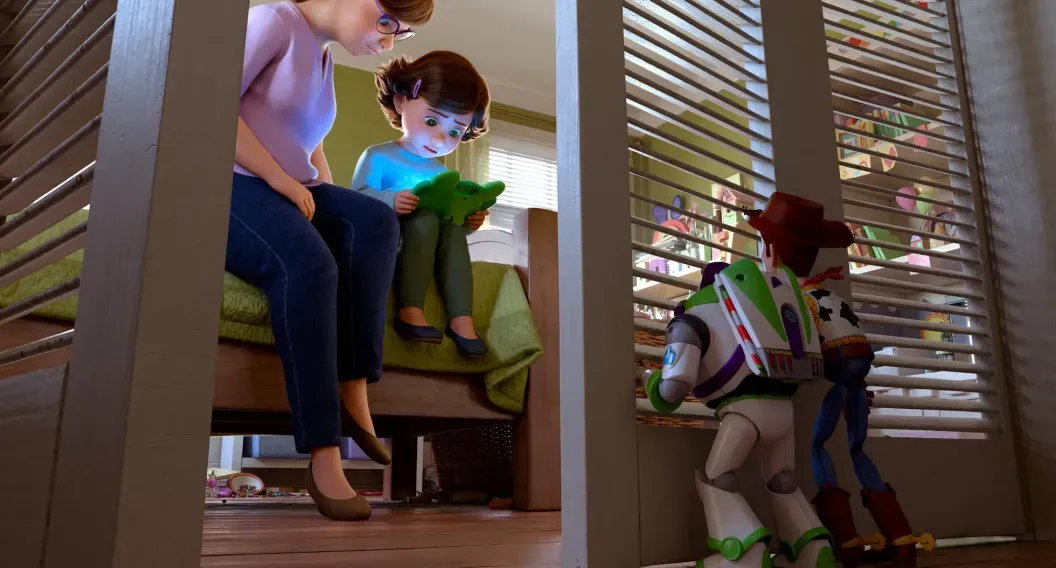
(Image source: PIXAR POST)
Every teenager in the audience instantly feels that heavy, crushing wave of nostalgia. We aren’t just watching a movie; we are looking into a mirror. The struggle in Toy Story 5 perfectly captures a weird truth about our generation. Those born or raised in the 2010s lived through two completely different childhoods:
- Childhood v1.0: Low-tech, high-effort, physically chaotic, and intensely imaginative.
- Childhood v2.0: Screen-bound, algorithm-fed, highly isolated, and effortlessly fast.
It feels like a total system glitch. How did we manage to live through two entirely opposite eras before even turning 18? In fact, we are the first generation mourning our childhood. We are not just nostalgic for old toys; we are grieving the true version of ourselves—the version that didn't need a screen to survive.
The Physics of Fun in Childhood v1.0
In the early 2010s, fun was an experience that required you to get moving and fire up your imagination. Back then, I would join random groups of neighborhood kids for unstructured adventures: playing hide-and-seek, crunching dried fallen leaves under our shoes, or chasing each other on scooters. Back at home, I could spend an entire afternoon role-playing with dolls, doodling on the wall, or "driving" a little toy train across the rug.
We weren't entertained by pre-scripted screens, but by the sound effects and characters we creatively dreamed up, alongside the physical textures of touching and observing the real world. Happiness back then meant immersing yourself in a world created entirely by you. Every bit of joy was built on active effort, patience, and genuine exploration.
[ MEMORY UNLOCKED: "Deep Play" Mode ]
Remember when you could sit on your bedroom floor for four straight hours, inventing an entire soap-opera storyline with random plastic toys? Or meticulously building a wooden train track system across your entire living room?
Psychologists refer to these behaviors as deep play. When you manually manipulate physical objects—whether drawing on paper or staging a battle between action figures—your brain enters this state of total cognitive immersion, operating with an intense sense of personal agency and achievement. In this moment, your brain isn't just passively receiving information; it is actively creating a world.
Slow-Hit Dopamine vs. Fast-Food Joy
This active engagement triggers what neuroscientists call slow-hit dopamine. Research tracking how dopamine regulates motivation reveals that anticipation and effort generate far more sustainable neural rewards than immediate consumption. Our "Childhood v1.0" required patience, imagination, and physical energy to build, which is precisely why it brought a far more lasting sense of fulfillment. Even our early digital games carried this hidden philosophy of "effort before reward." When I sneaked onto my dad’s old tablet, I played puzzle games like Cut the Rope, Angry Birds, and Where’s My Water?. They had fixed endings and required genuine mental effort to solve.
They were a flavoured side-dish to our childhood, never the main course.
Then, right as we were transitioning into our early teenage years, the world fractured. The COVID-19 pandemic completely scrambled our developmental timeline. Days blurred into one endless, repetitive routine:
Wake up ➔ Have online class ➔ Camera off ➔ Fall back asleep ➔ Scroll ➔ Repeat
Cooped up indoors, we lost the chance to touch and experience the real world firsthand. To cope with the anxiety of reality, we reluctantly traded away those former moments of "deep play"—which once demanded physical energy and emotional investment—for heavy doses of digital fast food.
Finding Non-Inflationary Happiness in the Brainrot Era
Today, the digital landscape has completely evolved. We no longer look for happiness; we are passively fed pre-packaged, AI-driven content manufactured by hyper-optimized algorithms.
This behavioral shift is what modern researchers call dopamine-scrolling—the habitual act of rapid platform-switching in pursuit of brief, highly entertaining content. Unlike the slow, deep sense of fulfillment that comes from building a LEGO set or playing hide-and-seek, scrolling delivers "fast-food dopamine.” It operates on a variable reinforcement schedule—identical to how a slot machine functions:
❌ no patience required.
❌ no mental progression needed.
❌ no active brain power used.
This dynamic has birthed our current culture of pure "brainrot." Look at the surreal internet memes we laugh at today—like "Skibidi Toilet," "67," or various viral trends. If you analyze them objectively, they lack logic or narrative depth; they are pure visual noise and hyper-stimulating audiovisual clips engineered specifically to hijack a short attention span. But because our brains are constantly blasted with this high-intensity digital noise, the "price" of happiness has completely inflated.
As detailed by Stanford University addiction expert Dr. Anna Lembke, when the brain is repeatedly flooded with unnatural surges of dopamine, it compensates by downregulating its own dopamine receptors. Over time, your brain builds a massive tolerance. To feel even a baseline level of joy, the content you consume has to be weirder, louder, and faster than before. This is why a simple wooden toy train track or a physical book doesn't seem to "work" for us anymore. The simple joys of life haven’t vanished, but our ability to feel them has been buried under a mountain of cheap notifications.
Rewiring Your Mind: Pick up the Slow-hit Happiness
We don't have to stay trapped in a "brainrot" loop forever. Try these simple exercises to reboot your brain and enjoy meaningful happiness once again:
- Reclaim Deep Play
Make your brain work for its reward. Spend one hour a week on a physical, tactile activity—like building a LEGO set, sketching, playing an instrument, or cooking a meal—focusing your attention entirely on the process.
- The Golden Hour Rule
Stay off your phone for the first hour after waking up. Give yourself time to experience the real world before digital noise floods your nervous system.
- Radical Sensory Grounding
Intentionally slow down to experience the present moment—like focusing on the sound of flowing water in the shower or savoring your tea without looking at a phone—allowing your senses to recalibrate to the pace of the real world.
Let’s find pure and meaningful happiness in this digital age!
---------------------------------------------------------------------------------------------------------------------
Reference:
- Why our brains are wired for addiction: What the science says
- Dopamine-scrolling: a modern public health challenge requiring urgent attention - PMC
- The Dopamine Paradox: Why Pleasure Often Undermines Motivation GlobalRPH
- Examining the effect of digital dopamine detox gamification interventions on attention span and procrastination among young adults
- 16 Play Types: What is Deep Play?

